
CUE and Iraqi Association of Political Psychology Launch Foundational Conference on the Iraqi Personality

In cooperation with the Iraqi Association of Political Psychology, the catholic University in Erbil organized an academic conference entitled “The Iraqi Personality”: “Renewed Readings and Field Investigations.” The conference was attended by a number of researchers, academics, and figures from the local community.

The conference, held on January 22, 2026 – included three interactive sessions in which eight research papers—both theoretical and field-based—were presented by eight researchers from the disciplines of sociology, psychology, anthropology, history, and philosophy. These researchers represented various Iraqi academic institutions. The papers addressed a wide range of topics, including emotions in the Iraqi personality, social representations and narratives, and the impact of social media on the Iraqi individual.

Within this context, Dr. Fares Nazmi, President of the Iraqi Association of Political Psychology, mentioned to the university’s website that “the idea of the conference is an attempt to revive the study of the Iraqi personality after this field has suffered from considerable neglect, unscientific approaches, and hasty generalizations. The aim was to re-considerate this field of study.” Regarding the cooperation between the Catholic University in Erbil and the Iraqi Association of Political Psychology, Dr. Nazmi stated: “We believe it is a fruitful collaboration, and we hope there will be further opportunities in the future. The Catholic University in Erbil is known for adopting authentic scientific initiatives and consistently supporting such efforts, particularly in complex topics or subjects that require renewal and originality.”

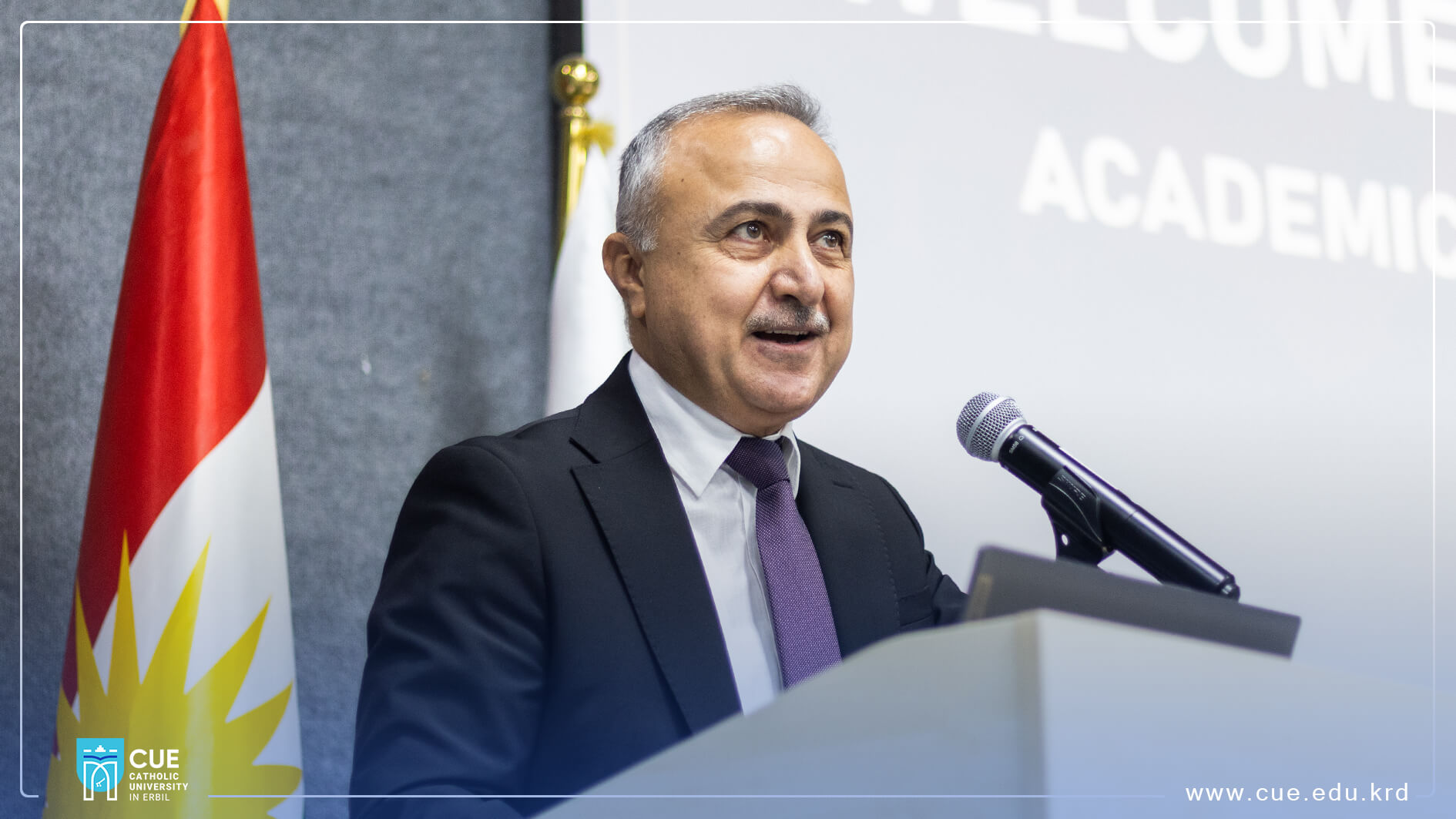
Dr. Nizar Shabila, President of the Catholic University in Erbil, commented on the conference, saying: “Organizing conferences on this topic or similar ones are very important for the development and growth of society and for building critical thinking. It also helps in discussing issues that are important to society, which the university considers an important role in contributing to social progress.” Regarding the topic of the Iraqi personality, Dr. Shabila stated: “This topic is extremely important because the Iraqi personality is rich, yet at the same time historically and socially complex, and there is a shortage of research and academic papers regarding this subject.”

As for the views of the participating researchers, Dr. Jassim Mohammed Abdi, a specialist in counseling psychology from Al-Mustansiriya University and a founding member of the Iraqi Association of Political Psychology, spoke about the importance of the conference, noting that the papers presented covered multiple disciplines—sociology, anthropology, politics, and history—and were characterized by high precision and rigorous scientific methodology. Regarding the academic cooperation between the Catholic University in Erbil and the Iraqi Association of Political Psychology, Dr. Abdi said: “Without a doubt, this is an intellectual and cultural cross-fertilization that produces new knowledge structures, given the competencies both institutions possess.”

Similarly, writer and researcher specializing in social psychology, and member of the Iraqi Association of Political Psychology, Dr. Loay Kharaal Jabr, noted that this conference is a foundational one, as it is the first qualitative, foundational conference dedicated specifically to the topic of the Iraqi personality. Regarding the partnership between academic institutions, Dr. Jabr added: “Academic interactions, collaborations, and mutual understandings are important in themselves, but this conference has a special significance because the Catholic University in Erbil has a unique character, and the Iraqi Association of Political Psychology also has a unique character. Both are specialized institutions, and their cooperation provides a different level of qualitative excellence, which we take pride in within Iraq.”

The conference’s final statement, which included a number of recommendations, emphasized that the research and discussions confirmed that the Iraqi personality is not a subject for rhetorical debate, but rather a research project that requires an institutional vision, sustained efforts, and long-term cumulative scholarly work. The conference represents a first step toward moving from general perceptions to systematic, scientific research. The recommendations also stressed the necessity of conducting further field-based and theoretical scientific research to enrich knowledge in the areas and themes addressed by the conference.
Share
Search
Latest News

Categories
Follow Us
